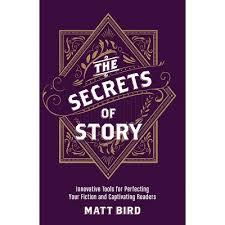
Writing Resource: The Secrets of Story by Matt Bird
One of the most thorough resources on fiction writing is Matt Bird’s The Secrets of Story. It’s not about grammar, or a simple, general statement of “show don’t tell” which all writers have hear countless times. Instead, Matt breaks down the elements of storytelling including theme, character, character arc, dialogue, tone, and rewriting. He is the “Dr. Phil” of writing – sometimes you don’t like what he has to say, but you know he’s right. With each tip, Matt offers a checklist of questions and a section of “misconception” versus “au contraire” where he dispels common misunderstandings. While there are numerous examples I could give, and will give in future blogs, today I’ll start with his explanation of a main character (aka – our hero) choosing between two rights or between two wrongs, not between a right and a wrong. Sounds backwards, doesn’t it? Why would a good story consist of choosing between two rights – sounds like a win-win to me. But, as Matt explains, there must be an emotional cost to the choices. Matt writes, “the heroes should face a long succession of additional dilemmas throughout the story,” and then he references Casablanca as an example (273). No dumbing down here. Indeed, it is a tough pill for a writer to swallow when one realizes a major overhaul is needed because our beloved protagonist is currently choosing between good and evil, and clearly that is not the recipe for a compelling story. This is one of many points that Matt explains in great, convincing detail before telling his readers to forget everything he just said (but not really). Matt’s writing is fun to read, albeit exhausting at times for all the tips and examples. It is a necessity on any writer’s shelf.
On Writing: Why Short Pieces Help in the Long Term
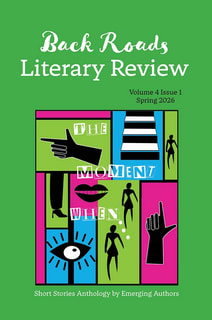
As writers, we are often advised to write daily, same time, same place, and to meet our daily word count. Showing up on a “bad” day and still getting words down separates the true writers from the imposters. I beg to differ. Yes, daily writing matters and helps, as does daily reading, and walking. But same time, same place? That is nearly impossible for anyone with children, aging parents, pets, or another job. Having a household to run means certain duties must also get done, and some of these are unexpected. I have found that flexibility in my writing practice has served me well, and not just in the habit of writing, but in the type of writing itself. Writing shorter pieces in between the “muddle of the middle” of my WIP gives me a sense of satisfaction at completing something, and gives my brain a refreshing break from the same-old, same-old. When I need to switch up my writing, a short story is often just what I need to prioritize. Daily word count does not matter. Rather, the sense of getting to know a different character so well in so short an amount of time is thrilling. That this character’s world can come to life so vividly in only a few pages stimulates the creative juices that I can carry back to my WIP. This is not to say that short stories are easy to write. My most recent published story, “The Red Shoes,” was written over a period of two years, off and on, when I needed a change in routine. I had a hard time with the ending (see the previous blog post) until I changed the main character’s age, which changed the stakes and then the ending fell into place. Once this piece was accepted for publication in Back Roads Literary Review, I felt a new energy towards my WIP, and now I am happy to say that it too, has fallen into place, and is done. I’ll be querying that soon, and hopefully will have good news to share in the near future.
Writing Tip Wednesday: My Third Published Short Story
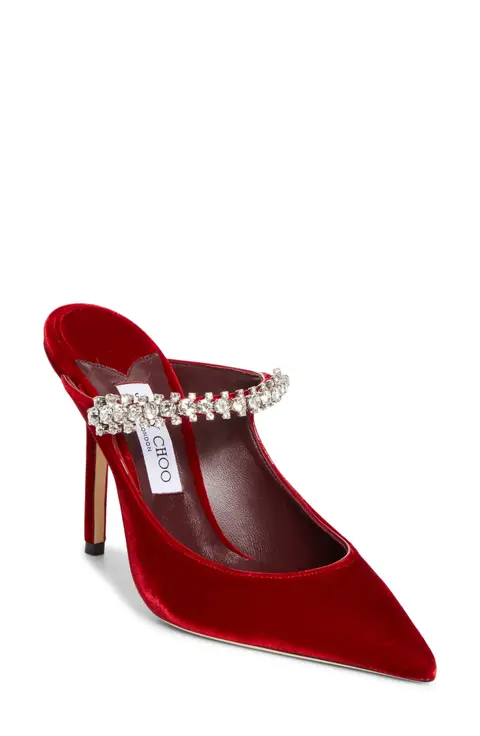
I am happy to announce that I have published another short story! “The Red Shoes” is included in the Back Roads Literary Review Spring 2026 anthology (link for purchase on About Me page). When I saw that the theme for the Spring anthology was “the moment when,” I realized I already had the beginning of short story that would work. The problem was, it wasn’t finished. When I first wrote it a couple of years ago, I tried a half-dozen different endings, but none of them seemed to be the right one. With a deadline for submission in mind, I found the google doc, dusted it off, and reignited the process of trying to finish it. Nothing like a deadline to get a writer writing! Once again, my main character could not solve her dilemma of wanting a pair of ladies’ red shoes that she sees in a shop window. After all, she was only eight years old, so what could she really do to get them, and then what would she do with them once she had them? Then I had a lightbulb moment: what if she is older than eight? It seemed so simple, but a few years makes a big difference to a kid. Now my protagonist is twelve years old, just on the cusp of being a teenager, but not quite there yet. Suddenly the stakes were higher: she could wear them to a junior high dance; the other girls would be jealous; people would treat her like an adult. Bingo! Just the change I needed to show her desire and her desperate attempt to get them. I hope you enjoy reading it!
Writing Tip Wednesday: Head-Heart-Gut Polarization
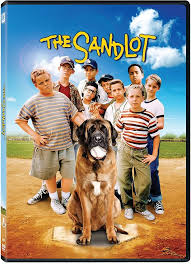
Writing-manual author, Matt Bird offers a detailed explanation of why and how writers can create an ensemble of characters with different personalities. In The Secrets of Story, Bird explains how secondary characters can act as advisors to the protagonist, each in their own way. To illustrate, I will use the classic kids’ movie, The Sandlot. One secondary character should act as the voice of reason – offering a responsible, intelligent solution, or warning of possible detriment from making a bad decision, representing the head. In The Sandlot, this would have to be Benny the Jet. He is the one who saves Scotty, first by inviting him to join the team, and later by getting the ball back from the beast. Another character could also advise or interfere with the protagonist’s goal by acting from their heart. Such a character is the hopeless romantic, or the goofball friend who can do no wrong. I picture Squints here, hopelessly in love with baseball and Wendy Peffercorn. The third character type acts from their gut, often causing trouble and disagreeing with the others. In The Sandlot, this would have to be Ham. He riles up the rival team, makes sarcastic comments, and isn’t afraid to sass Scotty with, “You’re killing me, Smalls!” Creating a cast of characters can be intimidating, but keeping the head-heart-gut model in mind is a great way to ensure that your protagonist is not surrounded by all the same type of characters, and will keep your readers turning pages to find out what they’ll say or do next.
Writing Inspiration: Eudora Welty
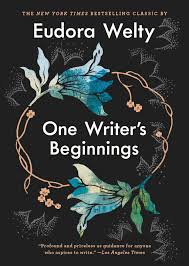
In graduate school, I read Eudora Welty’s One Writer’s Beginnings the first time. I did not consider myself a writer then, and it was not a goal of mine at that time. My professional goals evolved around teaching English to middle school students. At that time, I do not think I connected with Welty’s book because I could not relate to it. There is a saying about the right book in the right hands at the right time, and re-reading her words later in life as I channel my professional energy into writing exemplifies this belief. Welty describes how the smallest details in her parents’ home, her summer road trips to West Virginia, her love of books and knowledge and words all contributed to the writer she became. Her mother’s set of Dickens novels was her most-prized possession. She was a keen observer of dialogue and human interactions, most notably between her parents. Whether these observations were apparent as a child or if they revealed themselves in retrospect does not matter. Her analysis of her childhood, her beginnings, is relatable and inspirational for writers today, even those from the most humble of beginnings.
Writing Inspiration: A Writing Retreat in Provence
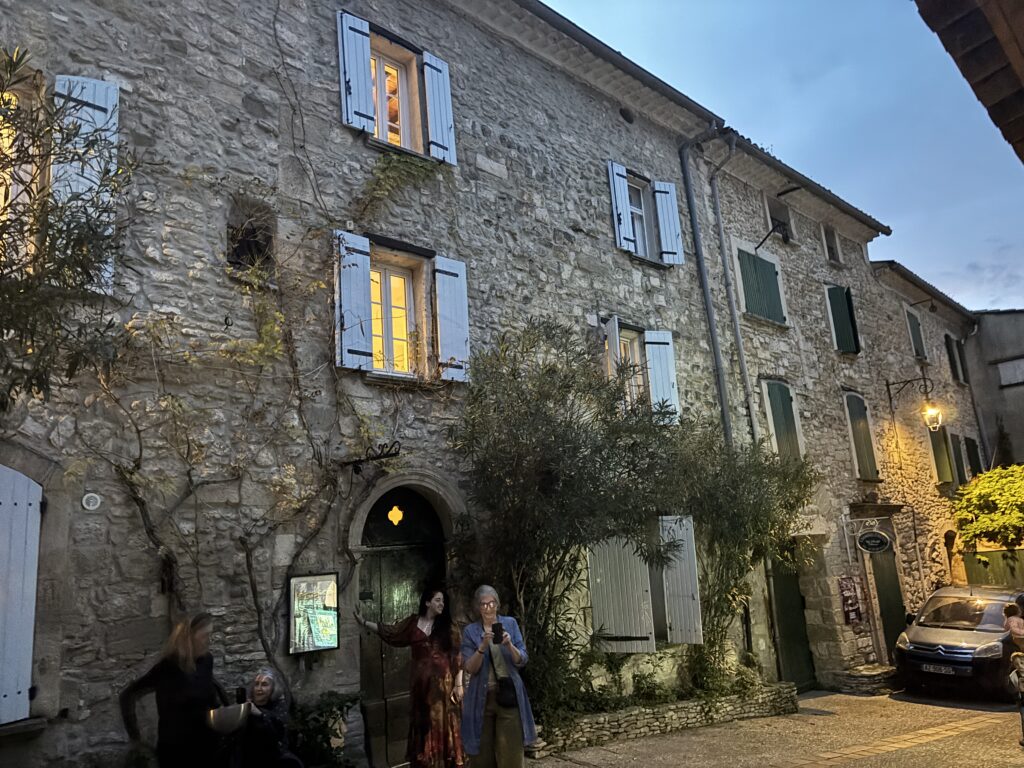
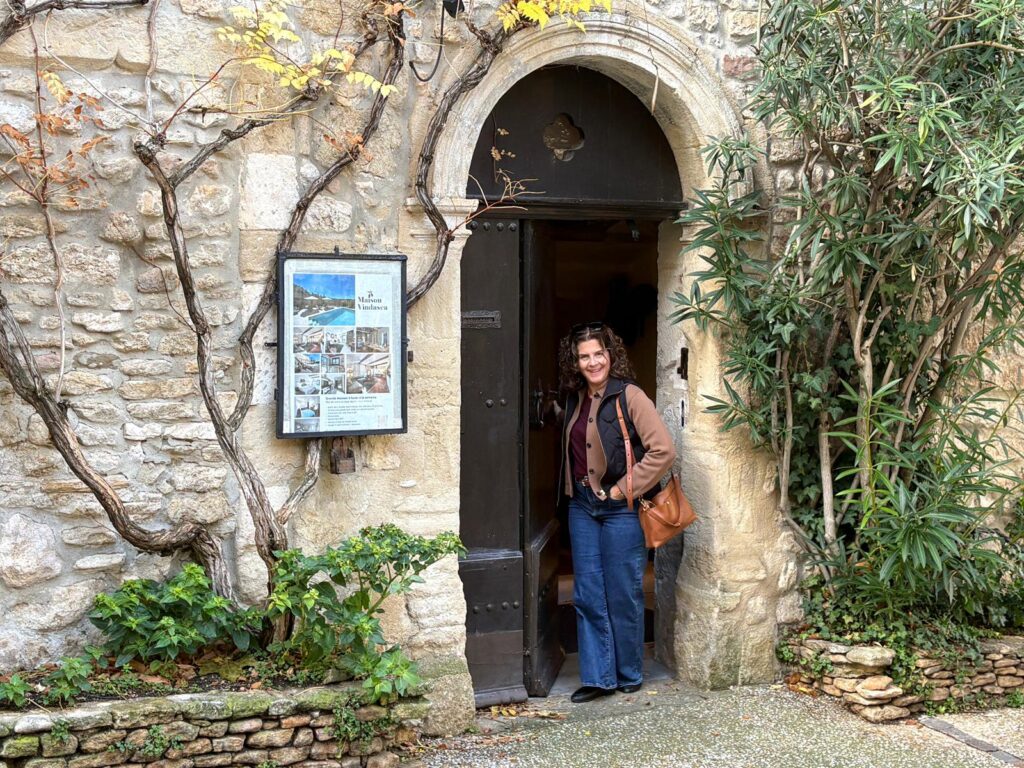
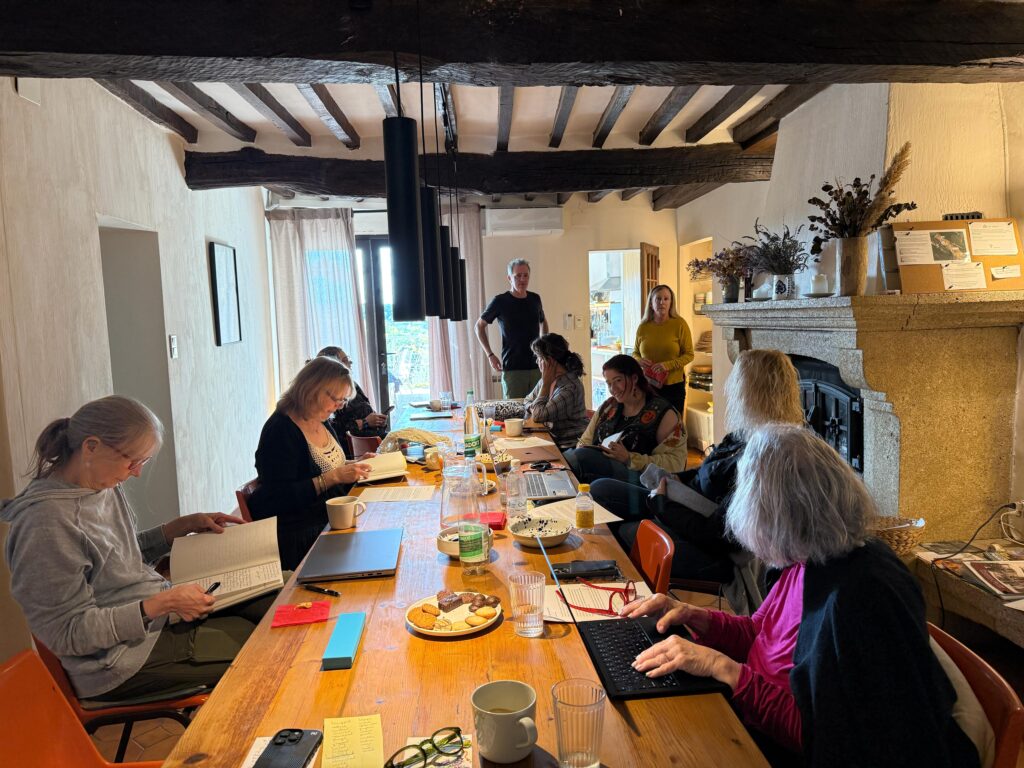
A writer’s world can be a lonely one. Spending hours at a computer or with a notebook, imagining conversations and events taking place, is not the same as interacting with friends face-to-face. As a writer, I miss the camaraderie of working with fellow teachers, or other colleagues, despite belonging to various online writing groups. To resolve this issue, I treated myself to a week-long writing retreat in Provence. Discussions about point of view, character arc, format, query letters, humor, characterization, and various other topics were lengthy, beneficial, and interesting. Being with other writers who are going through similar struggles, and who can offer advice and encouragement specific to my story, was invaluable. Of course, the success of the retreat depended on the quality of instruction. Our leader was a multi-published author in my own genre (lucky for me) and prior to writing full time, he was a teacher. He created engaging lessons that appealed to all present, no matter their genre, experience, or progress. Bonding with fellow writers while also enjoying the South of France was a great gift to myself, and will pay dividends in my writing.
Writing Inspiration: My Jewelry Box
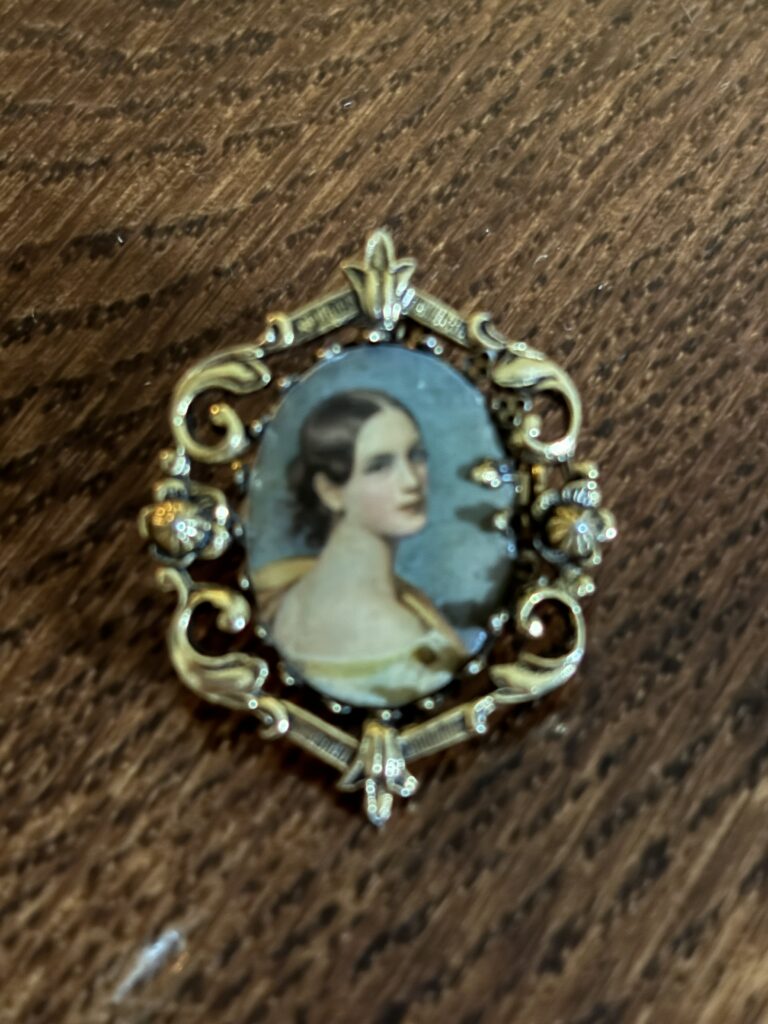
I have just had the privilege of publishing my second short story, “The Pin,” on the Academy of the Heart and Mind website (on September 19, 2025). This was a fun story to write and revise – much more fun to revise than the novel I am currently working on. The inspiration for the story was a small pin, pictured at left, that has been in my jewelry box since I can remember. I don’t know where it came from, but I am guessing it was my grandmother’s or one of my great aunt’s and somewhere along the line it came to me. I never wear it, but I can’t seem to donate it either. What is an author to do? I wrote about it. It sat on my desk and I started asking questions: whose is it? is it gifted to someone? from whom and to whom? did they like it? I decided to make it a gift from a man to his girlfriend, but not a special occasion gift. I wondered if she would like it; if she would wear it. Then I had to dive deeper into their characters to discover who they were, what they did, what choices they make, and why. Short stories are great exercises in character development. I enjoy short stories with less plot and more character, and settings that are ordinary but “off” somehow. (Link to “The Pin” on the about me page.)
Writing Tip Wednesday: Believable Heroes
In his writing manual, The Secrets of Character, Matt Bird advises writers to create characters their audiences will believe in. This makes sense, doesn’t it? Why invest time and attention on a character you do not believe in? Matt (feels strange to refer to him as Bird) offers many devices and tricks to make main characters come to life, so that readers “feel like [they] know this hero” (11). One aspect of believability is characterization, and one way to show characterization is with food. “Giving them something to eat in the first scene accomplishes” putting something in their hands that they wouldn’t have if they weren’t in this specific circumstance (16). Interesting. Nothing generic here – no bland suggestions about what your character likes to eat or doesn’t like to eat. Telling writers to pick a food that is specific to that scene and put it in the hero’s hands is probably one of the most specific pieces of advice I’ve come across. So what did I do? I gave my character a glass of ginger ale because he is visiting his ailing grandfather and his grandparents only have ginger ale in the house. I hope that makes my hero believable, and even generates some empathy from kids who can relate.
Writing Resource: The Secrets of Character by Matt Bird
I can’t say enough about all the advice Matt Bird crams into The Secrets of Character. This writing manual is full of tips, tricks, and examples for writers to use just within the first ten pages. That’s right, the first ten pages, because Bird knows that agents won’t read past that if they don’t love your main character. Bird preaches the mantra: Believe, Care, Invest over and over with a plethora of examples that he analyzes to explain how they work. Great writing is not just talent; it’s hard work. Matt Bird helps writers see and understand what authors do and why their choices work. Not only is the book helpful, it’s hilarious. Writers, if it’s not on your shelf, it should be.
Writing Resource: Save the Cat! Writes a Novel by Jessica Brody
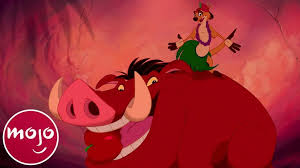
There is much to say about Jessica Brody’s Save the Cat! Writes a Novel, but today I will focus on one specific detail: assembling the troops. In her novel-writing manual, Brody breaks down the grand finale into five beats, or moments, so that writers have a checklist of sorts to follow. The first of these five beats is assembling the troops. Our main character must gather allies to help them storm his (or her)castle. Sometimes this means that the protagonist must make amends with characters who are upset with him. Sometimes it means convincing unlikely fighters to garner their weapons because their help is needed. In Disney’s The Lion King, Pumba and Timon, along with Nala and the lionesses, are Simba’s troops to help him fight against Scar. Once they pledge their loyalty to Simba, Simba makes them bait for the hyenas. This provides the audience with humor (“are you achin’ for some bacon?”) in an intense and scary scene. But their help is necessary. Simba cannot go alone against Scar and the hyenas. This singular moment in the movie sets up the rest of the grand finale for Simba. In your own writing, who are your protagonist’s troops, and how does he convince them to help?
An Artist’s Date: The Morgan Library
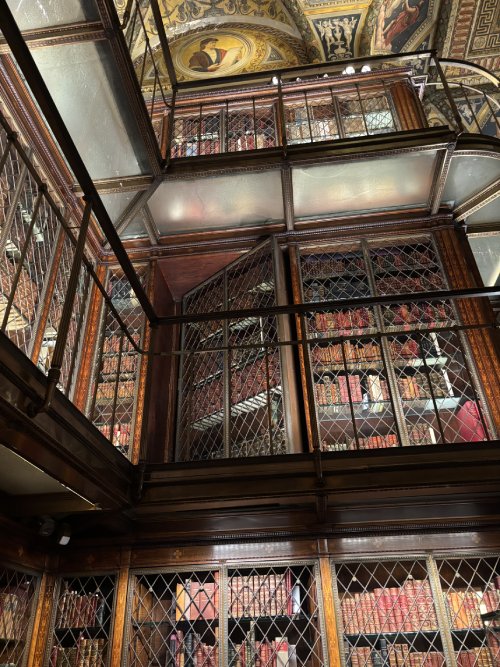
I treated myself to an afternoon in New York City to visit the Morgan Library. After reading The Personal Librarian by Marie Benedict and Victoria Christopher Murray, I felt I owed it to myself to see just how grand it is. And it did not disappoint. The museum entrance and necessary spaces are built around the original building, so the library is today just as it was when Belle and Mr. Morgan worked there. Visitors can enter the building from the museum hallway and see just where JP Morgan sat, where Belle worked each day, and of course, the grand library itself, complete with secret doors built behind the bookcases. Aside from the many beautiful volumes, there are numerous artifacts from Mesopotamia and Ancient Rome. My favorite is the gold panel with remnants from the True Cross of Christ embedded in it. Magnificent!
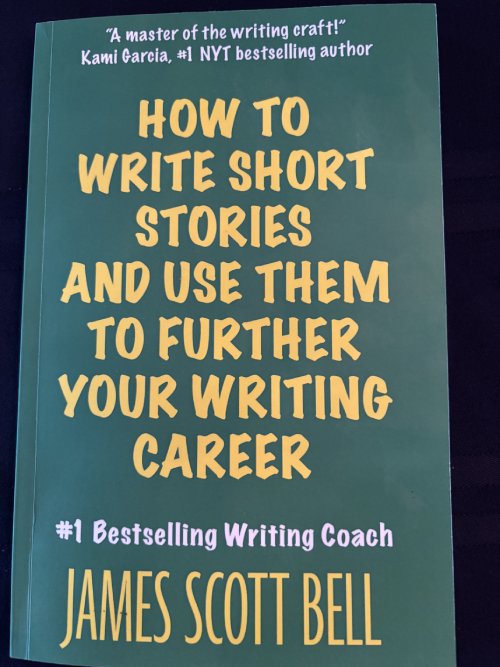
Writing Resource: How To Write Short Stories and Use Them To Further Your Writing Career by James Scott Bell
Writers looking to sharpen their short story skills and increase productivity will benefit from James Scott Bell’s manual, How To Write Short Stories and Use Them To Further Your Writing Career. The slim text breaks down the components of a short story into a shattering moment + the emotional fallout of said moment. Bell likens the moment to a glass shattering, and explains how the whole story should either lead up to that moment, deal with the aftermath of the moment, or a little of both, depending on where the writer places it. His advice is practical and useful; I’ve been revisiting my short stories and looking for the shattering moments in them, and if they don’t have one, I have to revise. Bell also includes several short stories in the manual as examples. A quick, affordable read, Bell’s book is a must for aspiring short story authors.
Writing Resource: The Magic Words by Cheryl B. Klein
Writers of children’s books will benefit from the advice of Cheryl B. Klein’s The Magic Words. Klein offers list after list of practical, tangible, effective advice for every aspect of the writing process from generating ideas to drafting and revision. Her detailed instructions on creating a scene-by-scene bookmap might seem overwhelming, but if you can’t answer the questions, you know that you have even more work to do. Additionally, her recommendation of replacing “and then” with “therefore” or “but” is a practical technique to help craft scenes with a cause-and-effect relationship, rather than scenes that are disconnected and rambling. Every scene, every action must be the result or complication of what came before, rather than an event that just happens next for no real reason. Klein gives writers much to think about, and some of her lists are overwhelming, but writers will polish their craft as they pursue those magic words.
Artist’s Date: A Quest for Short Stories
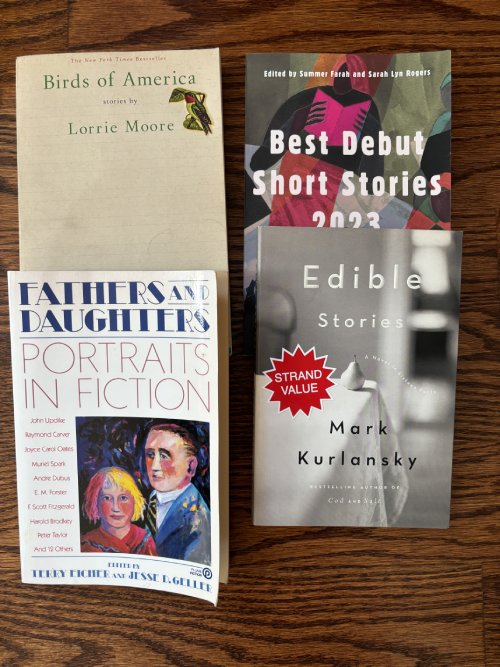
On a recent outing to The Strand bookstore in Manhattan, I purchased four collections of short stories. Writing short stories has its own distinct challenges that differ from writing novels, and a shorter word count does not make it easier. The pacing of a short story is a particularly tricky skill. Many short stories take place in only a few moments of time, such as “A & P” by John Updike, or “The Lottery” by Shirley Jackson. The timing of the present moment in each of these stories is a matter of minutes. Other stories may take days, such as “The Most Dangerous Game” by Richard Connell, or “The Yellow Wallpaper,” by Charlotte Perkins Gillman. In both styles, the author must get to the action immediately and pull the thread of suspense to the very end. I enjoy reading and teaching short stories, and now I’m trying to write them. I can’t say I’m enjoying it just yet, but I’m hoping that with the inspiration of a few new collections, I’ll be composing merrily away shortly.


An Artist’s Date: The Strand Bookstore in NYC
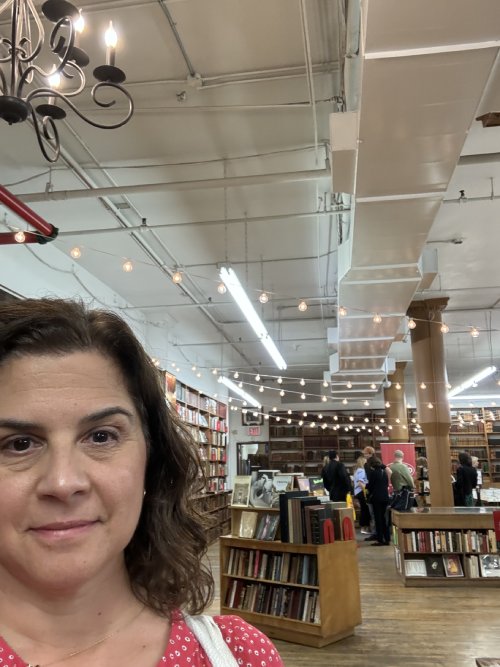
One tip from creativity guru Julia Cameron in her book, The Artist’s Way, is to take oneself on artist’s dates. One day recently, I needed a change of scenery while my family would be golfing for several hours. (Anyone else married to a golfer?) I boarded an NYC bound bus and within thirty minutes, I was walking downtown toward Strand Books on Broadway and 12th. Even though I was in the store for about an hour, I saw only a small part of it. I found a few short story collections, middle grade fiction, and adult fiction. I was fortunate enough to be there the same day that Sophie Gregoire Trudeau (wife of former prime minister of Canada, Justin Trudeau) was signing her new book, Closer Together: Knowing Ourselves, Loving Each Other (third picture above). I admit, I was a little starstruck to meet her, and by her side was the woman who owns the Strand. Two women superstars! A true New York moment. I want to go back to the Strand and peruse some other aisles and who knows who I will see there next?

Writing Resource: How To Write Short Stories and Get Them Published by Ashley Lister
I thought that after writing, three novels writing a short story would be simple. I would easily crank out a short story each month to submit for publication or a contest. Little did I know that while the literary components of a short story are similar to those in a novel, writing them is a different skill set. The pacing is different. The characters are different. What happens behind the scenes is different. So much has to be accomplished very quickly, like running the 100 meter dash versus running a marathon. You’ve got to jump at the gun and get those characters moving. The situation must be complex, intriguing, and resolvable in a quick amount of time, and don’t forget the ironic twist! That being said, I have found Ashley Lister’s How To Write Short Stories and Get Them Published to be a valuable resource for creativity, style, technique, and practice. Just like prepping for a sprint, short stories require practice, drills, and persistence. The race doesn’t always go to the swift, but to those who keep writing.
Writing Announcement: Two poems published!
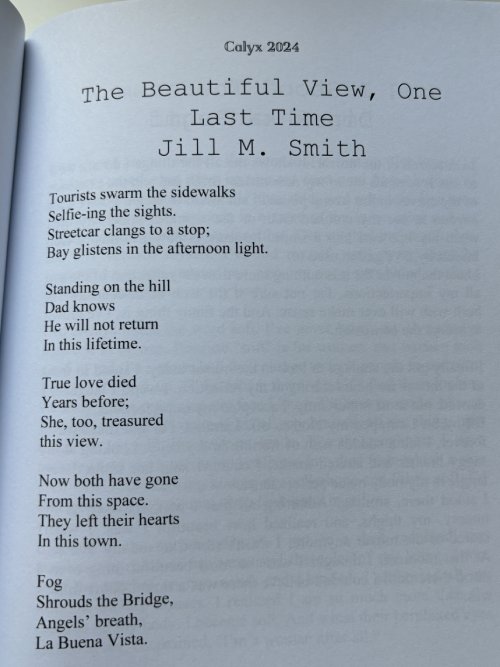
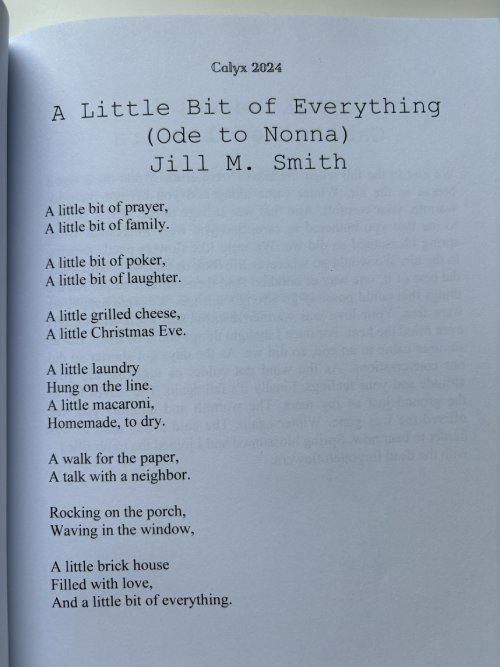
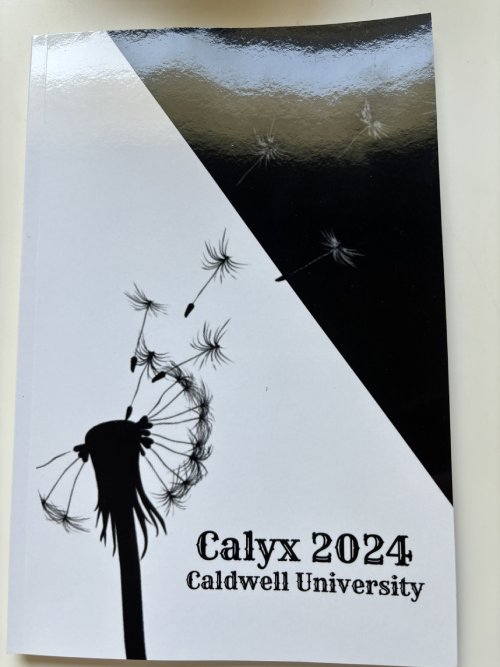
I am proud and humbled to have two poems published in the 2024 Caldwell University literary magazine, Calyx. While my primary focus is fiction, life events inspire me to wax poetic once in a while. One poem, “A Little Bit of Everything” is a memory of my grandmother and all the little things about her that I loved. The other poem, “The Beautiful View, One Last Time,” is in memory of my father-in-law who loved San Francisco and that beautiful view of the bay. Sometimes poems can do what sentences cannot, and that is what these poems do for me. I hope you enjoy them, and try writing your own!
Writing Inspiration: Julia Cameron’s Living the Artist’s Way
As a writer attempting to secure a contract with an agent or publisher, I often need reassurance, advice, and hope from experts in the field. Julia Cameron is one of these experts. Her book, The Artist’s Way, has been a source of inspiration since I first read it several years ago. I’ve recently read Living the Artist’s Way, which discusses using writing for guidance. Julia suggests, in addition to writing daily morning pages, writing any time I have a question that I need guidance on. It can be worldly or personal, practical or philosophical. In Living the Artist’s Way, she tells her audience, “Guidance comes to us through our own hand” (9). This is an empowering message. We do not have to wait for a sign from the universe; we can sit at our desks, ask the universe a question, and write what comes to mind. Who knew writing could be so powerful?
Writing Inspiration: NY Botanic Garden Holiday Train Show
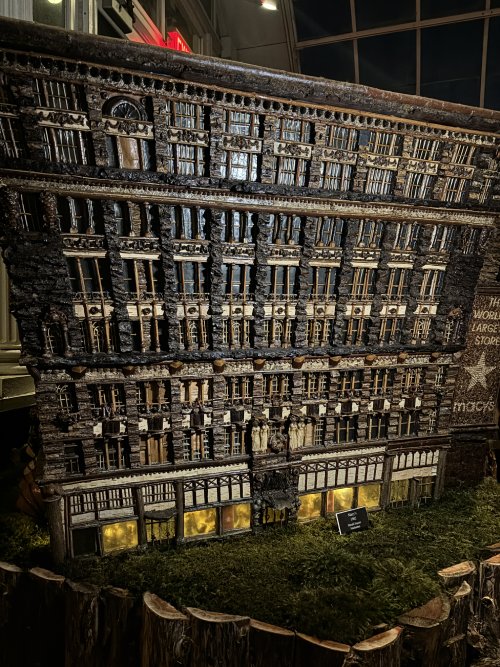
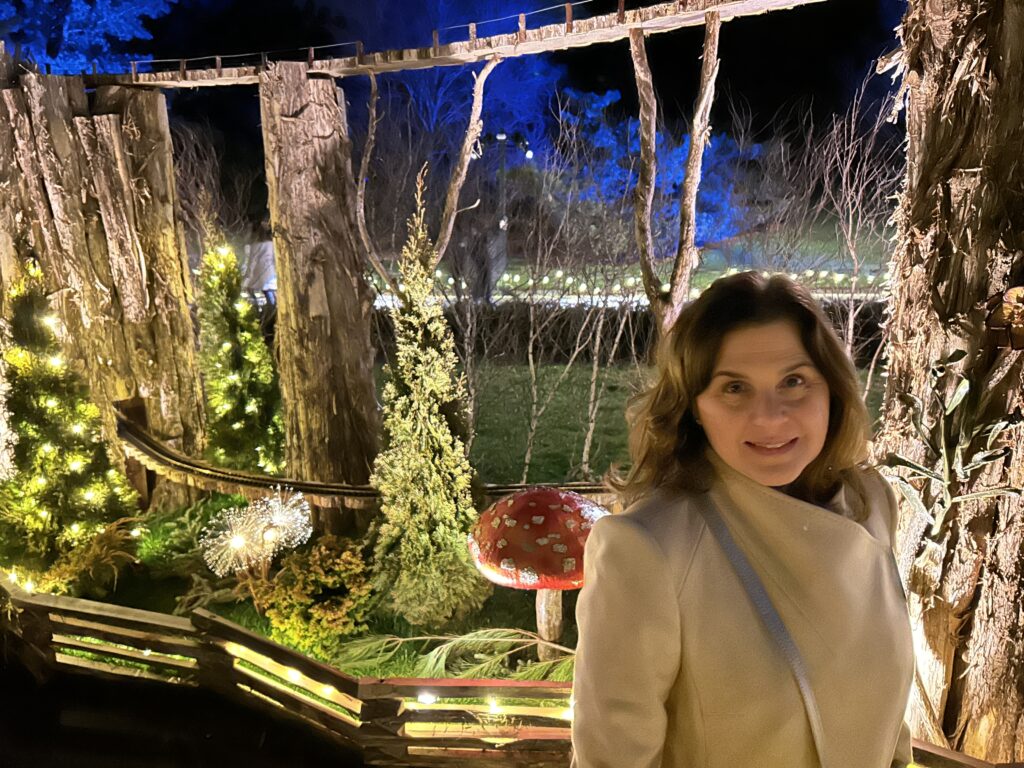
Bestselling author Julia Cameron (The Artist’s Way) recommends finding inspiration by treating yourself to artists’ dates. Recently, I visited the New York Botanical Garden and toured the holiday train show in the conservatory. Miniature recreations of various New York landmarks made of twigs, stones, and other materials were nestled in the flower beds among orchids, moss, and ferns. Many were lit from within, and all were spectacular. This artist date was enchanting. Do woodland fairies shop in a woodland Macys? I think they do.


On My Bookshelf: The Pillars of the Earth by Ken Follett
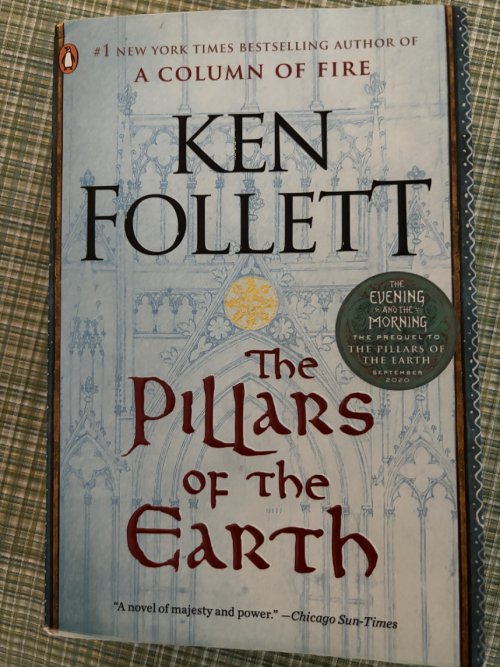
I’ve just finished reading Ken Follett’s The Pillars of the Earth. Although it’s been on my bookshelf for awhile, I had not read it, and so while completing final edits for my own trilogy, I chose this volume for something different from my story, and something that I hoped would be engrossing. I was not disappointed. I could not put the book down, and reading it was my reward for a session of revisions. Once I completed my revisions, I read between wrapping, baking, and decking the halls. As a writer I followed Follett’s masterful use of multiple points of view, and his weaving of the building of a cathedral into the story itself. While there were numerous characters, I never lost track of who was who, and what his or her motives were. At 973 pages, finishing this novel was a commitment and Follett never let me down. Happy Reading, and Happy New Year!
What I’m Reading: Truth & Beauty [a friendship] by Ann Patchett
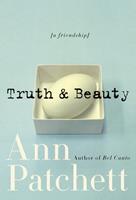
I’ve just finished reading Ann Patchett’s memoir, Truth & Beauty [a friendship]. Patchett shares the evolution of her friendship with author Lucy Grealy. Meeting in college with aspirations of publication, both women had much in common, but it’s their differences that tell the story. When a child, Grealy had cancer and extensive chemo and radiation therapy afterward which left her missing half her jaw and most of her teeth. Yet she persevered, and, with Patchett by her side, or on the phone, became a published author. From a writer’s perspective the lessons are, first, keep writing despite not getting the results you want right away. Patchett’s 4th novel brought her more success than her first three. Second, no matter what obstacles – health issues, bad relationships, financial woes – come your way, keep writing if it’s what you really want to do. It’s an inspiring read for writers and readers.
Writing Inspiration: A Gift from the Past
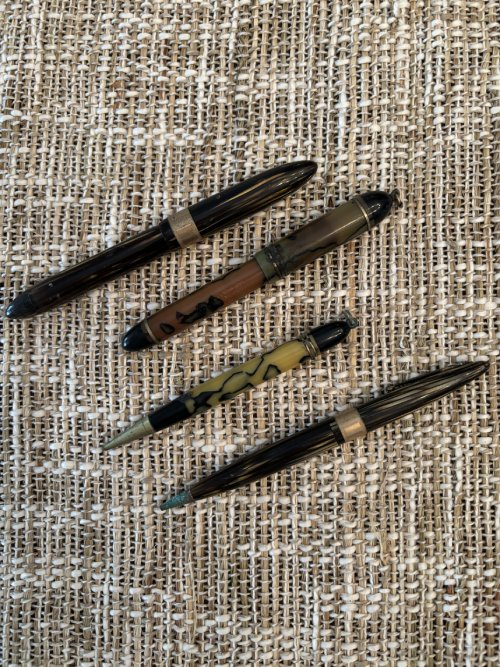
I received a gift of two antique fountain pens and two lead pencils from my aunt who had them from my grandmother, who passed away a few years ago. There was a note in the box that said they were the first gift my grandfather gave to my grandmother. They were married in 1937, so the pens and pencils are a little over 80 years old. I am so touched by the sweetness of this gift and that my grandmother kept them – though I admit I’m not surprised because she saved everything. I have several ornaments and objects in my house that are from my grandparents’ home, and I keep them not because of their monetary value but because of their sentimental value. I love knowing that such objects were so precious to my grandmother that she kept and labeled them so there would be no doubt as to why my aunt found them packed away in a box in her attic.